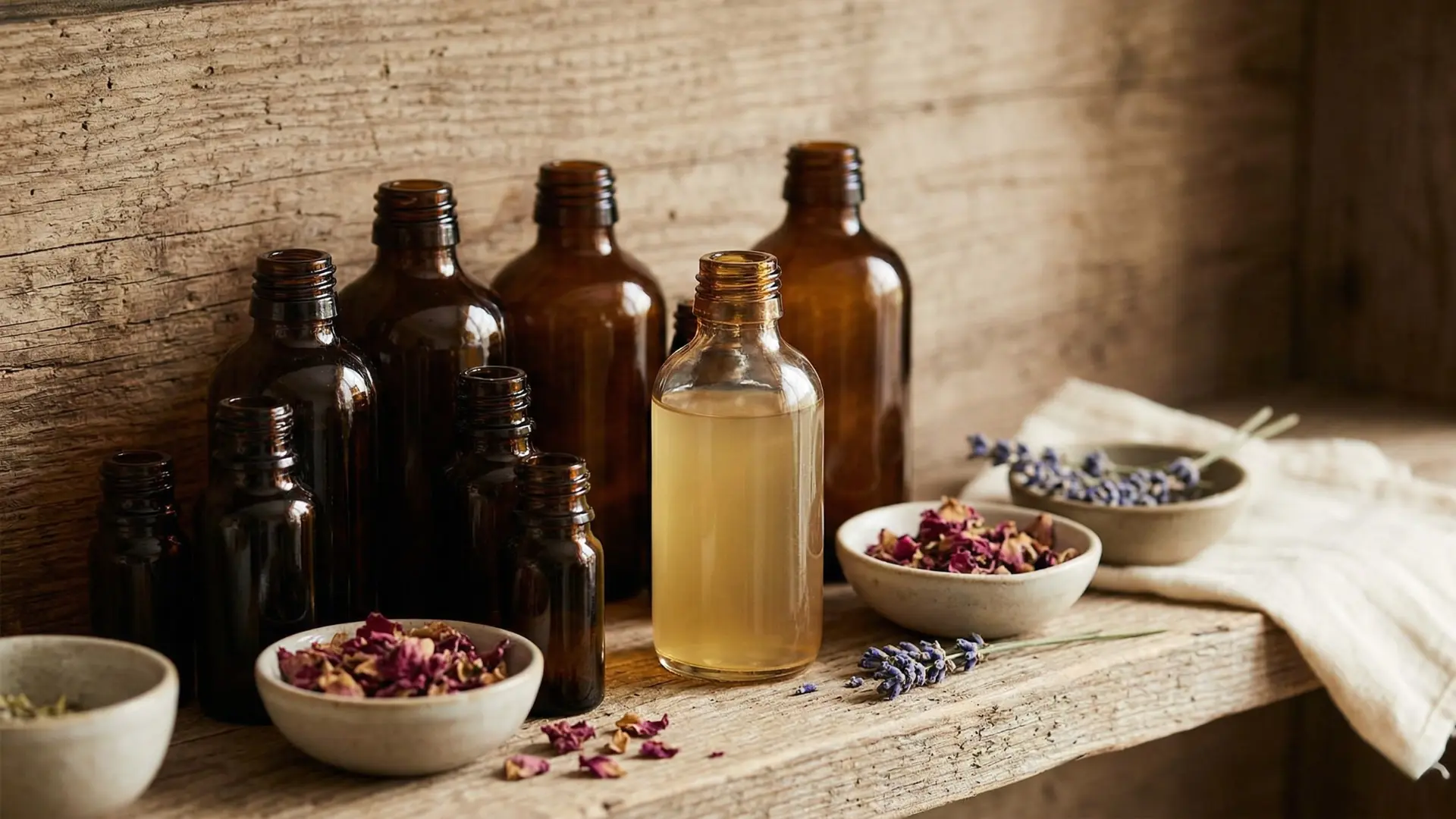
I have a confession to make. If you open the cabinet under my bathroom sink right now, you won’t find a neatly organized stash of towels. Instead, you’ll find a small, slightly embarrassing army of empty glass skincare bottles.
I just couldn’t bring myself to throw them away. They were too heavy, too dark and moody, and honestly, too expensive to just toss in the recycling bin.
“If you’re anything like me, you know the exact eco-guilt I’m talking about. We save these beautiful containers with the vague promise of ‘reusing them one day,’ but that day never seems to come.”
That is, until my skin started acting up last month, feeling tight and hopelessly dull. I decided it was time to finally put that glass to work. The result? A foolproof DIY face toner recipe that transformed my skin and finally cleared out my cupboards.
So, why skip the store-bought stuff?
Here’s the thing… I used to spend a small fortune on high-end facial mists. But when I finally learned to read the ingredient labels, I realized I was mostly paying for water, synthetic fragrances, and pretty packaging.
I knew I wanted to create a homemade facial toner that was genuinely nourishing, completely low-tox, and didn’t cost a week’s grocery budget to make.
I narrowed it down to three superstar ingredients I already had in my pantry. First, alcohol-free witch hazel to balance and soothe without stripping my skin. Next, pure rosewater for that deep, plump hydration we all crave.
Finally, a few drops of vegetable glycerin. This is the secret weapon that actually locks the moisture in, giving you that dewy, lasting glow without feeling sticky.
The crucial first step: Prepping your upcycled skincare bottles
Before we get to the fun part, we need to talk about hygiene. You can’t just rinse an old bottle and hope for the best, especially when we aren’t using lab-grade preservatives.
I like to peel off the old labels (a little lemon essential oil works wonders for melting away sticky residue) and wash everything in hot, soapy water.
Then, I boil the glass bottles for about ten minutes to completely sterilize them. For the plastic spray tops, a quick ten-minute soak in rubbing alcohol does the trick.
It takes an extra few minutes of effort, but there’s something incredibly satisfying about lining up those perfectly clean upcycled skincare bottles on the kitchen counter.
My holy-grail, zero waste toner recipe
This is where those empty bottles get their second life. This natural face spritz takes less than five minutes to mix up, and it is entirely foolproof.
Yields: Approx 100ml. Lasts up to 4 weeks in the fridge.
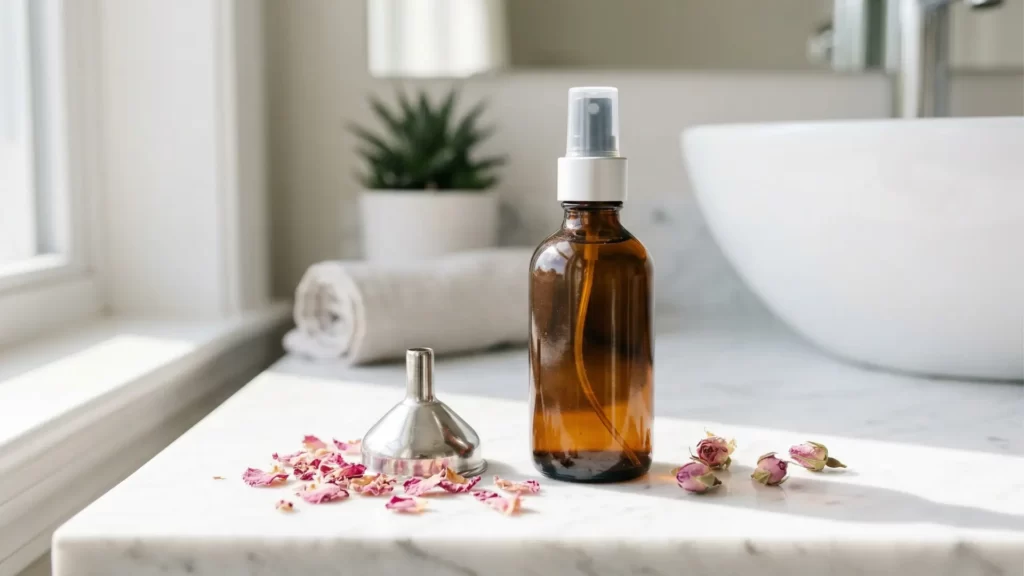
- 3 tablespoons of Alcohol-Free Witch Hazel
- 3 tablespoons of Pure Rosewater
- 1/2 teaspoon of Vegetable Glycerin
Using a small funnel, simply pour the witch hazel and rosewater directly into your sterilized amber bottle.
Add the vegetable glycerin last. Screw the spray top back on tightly and give it a really good shake to blend everything together. That’s literally it!
How I actually use this glow-boosting tonic
I highly recommend keeping your bottle in the fridge. Let me tell you, a chilled spritz of this right after a hot shower is the ultimate morning wake-up call.
I mist it generously over my face immediately after cleansing, while my skin is still slightly damp, before applying my face oils (I carefully stick to non-comedogenic oils so they don’t clog my pores). The damp skin helps pull all that botanical hydration deep in.
I also keep a smaller, travel-sized zero waste toner bottle on my desk to refresh my makeup and wake up my skin during the mid-afternoon slump.
Final thoughts on my favorite DIY face toner recipe
Whether I’m mixing this toner or whipping up a rich whipped body butter recipe to survive the winter, turning my stash of empty bottles into something so luxurious has been incredibly rewarding. It’s proof that we don’t need to spend a fortune—or create unnecessary waste—to treat our skin beautifully.
Whenever I use this DIY face toner recipe, I get a little thrill knowing exactly what’s in it, and knowing that I made it myself.
If you’ve tried this yourself, or if you’ve repurposed your jars for a DIY healing balm, I’d love to hear what worked for you!
You May Also Like