What Is Anhydrous Skincare?
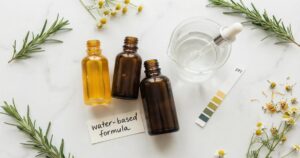
At its simplest, “anhydrous” means “without water.” In the context of cosmetic chemistry, an anhydrous product is any formulation that does not contain water as an ingredient. While traditional lotions and creams are emulsions—mixtures of oil and water held together by an emulsifier—anhydrous products rely entirely on oil-soluble components. This category includes a wide range of familiar items, such as facial oils, body balms, lip salves, cleansing oils, and solid lotion bars. Because these products lack a water phase, they behave differently on the skin and during the formulation process than their water-based counterparts.
The concept of waterless beauty originated in part from the Korean beauty market but has since evolved into a global sustainability movement. By eliminating water, brands and DIYers can significantly reduce their environmental impact. Water is a precious resource, and shipping water-heavy products increases carbon emissions due to the added weight and volume. Furthermore, because bacteria and mould require water to thrive, anhydrous formulations are naturally more stable and often require fewer (or even no) traditional preservatives, making them a favourite for those seeking minimalist or “clean” beauty solutions.
Benefits of Anhydrous Skincare for Skin
When you remove the water from a skincare product, you are left with a 100% active formulation. This concentrated nature provides several distinct advantages for your skin’s health and appearance.
First and foremost, anhydrous products are exceptional at barrier repair and protection. Because they are composed of lipids (fats and oils), they mimic the skin’s natural sebum. When applied, they create an occlusive layer that seals in moisture and prevents trans-epidermal water loss (TEWL). This makes them particularly beneficial for individuals with dry, dehydrated, or sensitive skin, as they help to reinforce the skin’s natural defences against environmental stressors.
Secondly, the absence of water allows for maximum potency of active ingredients. Many high-performance actives, such as certain forms of Vitamin C or botanical extracts, can become unstable or lose efficacy when exposed to water. In an anhydrous environment, these ingredients remain stable for longer, ensuring that your skin receives the full benefit of every application. Furthermore, because there is no water to dilute the formula, you often need to use much less product to achieve the desired result, making these formulations surprisingly cost-effective over time.
Another significant benefit is the reduction in potential irritants. Traditional water-based creams require emulsifiers to keep the oil and water from separating, as well as robust preservative systems to prevent microbial growth. Some of these additives can be irritating to sensitive skin types. By formulating without water, you can often bypass these requirements, resulting in a purer product that focuses solely on nourishment and repair.
Finally, anhydrous products offer a luxurious sensorial experience. The rich, velvety textures of a well-crafted body butter or the silky glide of a facial oil provide a level of indulgence that water-based lotions often struggle to match. These products encourage a more mindful application process, allowing you to massage the ingredients into your skin and promote better circulation and absorption.
What You Need
- Carrier Oils: These form the base of your product. Popular choices include Jojoba oil (which mimics skin sebum), Sweet Almond oil (nourishing and versatile), and Fractionated Coconut oil (lightweight and stable).
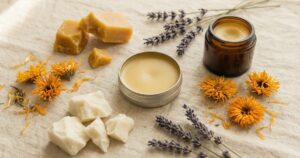
- Botanical Butters: Used for thickness and richness. Shea butter is excellent for deep moisturisation, while Cocoa butter provides a firmer structure and a delicious natural scent.
- Waxes: Essential for solid products like lip balms or lotion bars. Beeswax is the traditional choice, but Candelilla wax is a fantastic vegan alternative.
- Oil-Soluble Actives: Ingredients that provide specific skin benefits. Consider Rosehip oil for its regenerative properties, Squalane for lightweight hydration, or Vitamin E oil to protect the skin and extend the shelf life of your oils.
- Essential Oils: For natural fragrance and additional therapeutic benefits. Lavender, Frankincense, and Geranium are popular choices for facial treatments.
- Equipment: You will need heat-proof glass beakers, a digital scale (accurate to 0.1g), a stainless steel stirring rod, and a double boiler setup for melting butters and waxes.
Step-by-Step Recipe: The Nourishing Waterless Glow Serum
This simple yet effective facial serum is the perfect introduction to anhydrous formulation. It is designed to deeply nourish the skin while providing a radiant, healthy glow.
- Preparation and Sanitisation: Before you begin, ensure your workspace and all equipment are thoroughly cleaned and disinfected with 70% isopropyl alcohol. This is a crucial step in all DIY skincare to prevent contamination.
- Measure Your Ingredients: Using your digital scale, measure the following ingredients into a clean glass beaker: 35g Jojoba oil, 10g Rosehip oil, and 4g Squalane. Precision is key to ensuring a consistent final product.
- Combine the Oils: Stir the mixture gently with a stainless steel rod until the oils are fully blended. Since these are all liquid at room temperature, no heating is required for this specific recipe.
- Add Your Actives: Add 0.5g (approximately 10 drops) of Vitamin E oil to the mixture. Vitamin E acts as an antioxidant, protecting the delicate oils from oxidation and providing anti-ageing benefits for your skin.
- Optional Scenting: If desired, add 2–3 drops of your chosen essential oil (such as Frankincense for its rejuvenating properties). Stir again to ensure even distribution.
- Bottle and Label: Carefully pour your serum into a 50ml dark glass dropper bottle. The dark glass helps protect the light-sensitive oils from UV damage. Don’t forget to label your creation with the name and the date it was made.
Tips for Best Results
Creating professional-quality anhydrous products requires attention to detail. Follow these tips to ensure your formulations are successful every time:
First, always prioritise the quality of your carrier oils. Since oils make up the bulk of an anhydrous formula, using cold-pressed, organic, and fresh oils will significantly impact the final result. Avoid oils that have a rancid or “off” smell, as they can cause skin irritation and will shorten the shelf life of your product. Storing your oils in a cool, dark place is essential for maintaining their integrity.
Second, consider the absorption rate of your ingredients. A common complaint with anhydrous products is that they can feel “greasy.” To avoid this, balance heavy oils (like Avocado or Castor) with “dry” oils or esters (like Rosehip, Squalane, or Isopropyl Myristate). This ensures that the product sinks into the skin effectively rather than just sitting on the surface.
Third, pay close attention to temperature control when working with butters and waxes. If you overheat butters like Shea, they can become “grainy” upon cooling. To prevent this, melt your ingredients over low heat and cool the finished product quickly by placing it in the refrigerator. This encourages the formation of small, smooth fat crystals, resulting in a velvety texture.
Finally, remember that less is more. Because anhydrous products are so concentrated, you only need a few drops of serum or a tiny pea-sized amount of balm for your entire face. Applying too much is the most common reason for a greasy feel. Encourage users (and yourself!) to apply the product to slightly damp skin to help lock in extra hydration and improve spreadability.
Safety and Patch Testing
While anhydrous skincare is generally very gentle, safety should always be your top priority. Even natural ingredients can cause reactions in some individuals. Before using any new DIY creation, perform a patch test by applying a small amount of the product to the inside of your elbow or behind your ear. Wait 24 hours to ensure no redness, itching, or irritation occurs. Additionally, be mindful of the dermal limits for essential oils; generally, a 0.5% to 1% dilution is recommended for facial applications to avoid sensitisation.
Frequently Asked Questions
Do anhydrous products need a preservative?
Technically, if a product contains no water and no water will be introduced during its use (like a dropper bottle), it does not require a traditional water-soluble preservative. However, you should always add an antioxidant like Vitamin E (Tocopherol) to prevent the oils from going rancid. If you are making a product like a cleansing balm that will be kept in the shower where water might get inside, a broad-spectrum preservative is highly recommended.
Can I use anhydrous products on oily or acne-prone skin?
Yes, absolutely! Many anhydrous ingredients, such as Jojoba oil and Squalane, are non-comedogenic and can actually help balance the skin’s natural oil production. The key is choosing the right oils for your skin type. For oily skin, look for “linoleic-rich” oils like Grapeseed or Hemp seed oil, which are lighter and less likely to clog pores.
How long do anhydrous DIY products last?
The shelf life of an anhydrous product is determined by the shelf life of its shortest-lived ingredient—usually the carrier oils. Most DIY oil-based products will last between 6 and 12 months if stored correctly in a cool, dark place and protected with Vitamin E. Always check for changes in smell, colour, or texture, which can indicate that the product has expired.
Conclusion
Embracing the world of waterless beauty anhydrous skincare formulation is a rewarding journey that combines sustainability with high-performance results. By removing water, you are not only creating a more eco-friendly product but also a more potent and stable one that truly respects the skin’s natural biology. Whether you are crafting a simple glow serum or a complex body balm, the principles of anhydrous formulation allow you to focus on the pure, unadulterated power of botanical ingredients. We encourage you to try the Nourishing Waterless Glow Serum recipe today and experience the concentrated benefits of water-free beauty for yourself. Your skin—and the planet—will thank you!
You May Also Like