I vividly remember the first time I decided to play alchemist in my bathroom. I had my beautiful, upcycled amber glass bottle ready, a brand-new bottle of lavender essential oil, and the sheer determination to create the ultimate nighttime serum.
If a little lavender is calming, a lot must be a fast track to glowing skin, right? Wrong.
I woke up the next morning looking less like a glowing goddess and more like I’d lost a fight with a patch of poison ivy. My skin was red, tight, and furious.
It turns out, I had stumbled headfirst into one of the most common DIY face oil mistakes out there. I see so many of us making it, and I want to save you the literal headache (and heartache) of learning the hard way.
So, Why Are Essential Oils So Tricky?
Here’s the thing… essential oils are wildly potent. They aren’t just lovely scents; they are highly concentrated plant extracts.
When we are building a low-tox stash, it’s easy to assume that because something is natural, it’s inherently harmless. But nature is powerful, and you have to respect the chemistry to practice truly safe DIY skincare.
Applying undiluted, or heavily concentrated, essential oils directly to your face is a fast track to redness and can result in a painfully damaged skin barrier.
The golden rule you need to memorise is the essential oil dilution for face application: you should strictly stick to a 1% dilution rate. In plain math, that’s about 6 drops of essential oil per 30ml of your base oil.
The 3 Pitfalls I Learned to Avoid
Mistake 1: Treating Essential Oils Like Base Oils
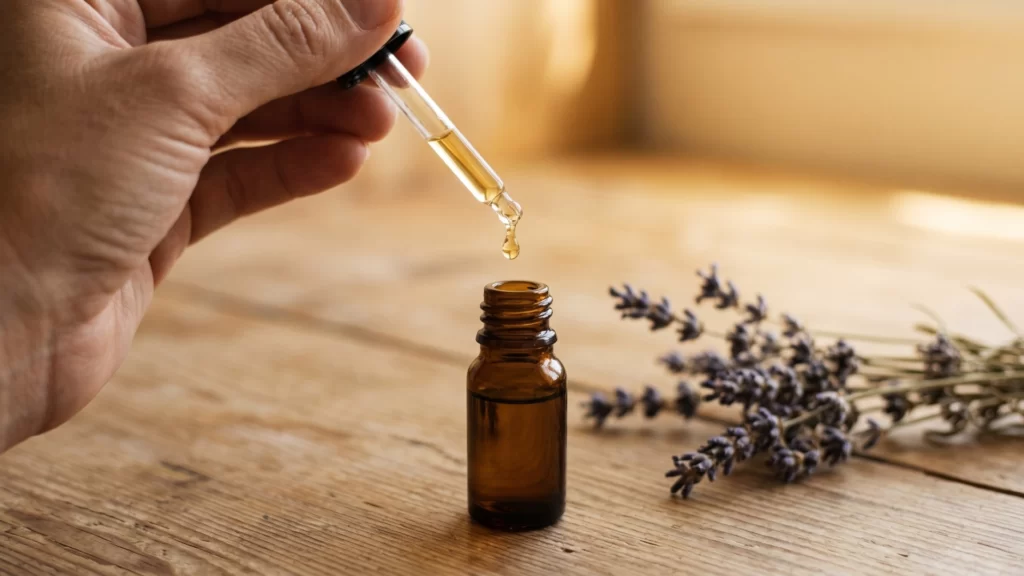
When I first started, I was pouring drops in without counting. It felt luxurious, but it was actually a recipe for irritation.
Your base (or carrier) oil is the vehicle; the essential oil is the active passenger. You only need a tiny amount to get the botanical benefits.
Always measure your base first, then carefully count your drops. Less is genuinely more here.
Mistake 2: Choosing the Wrong Foundation
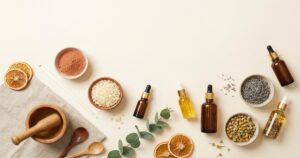
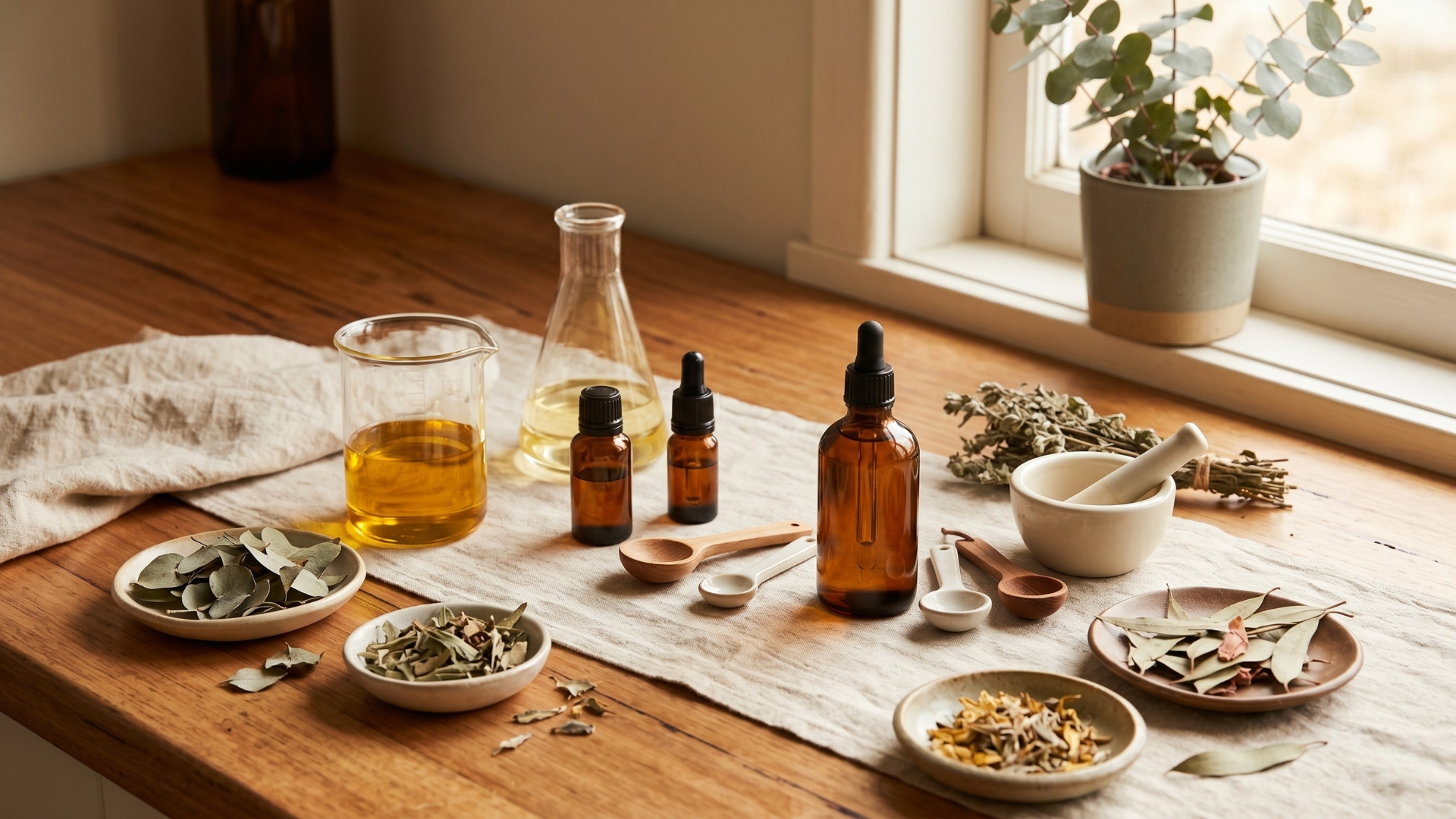
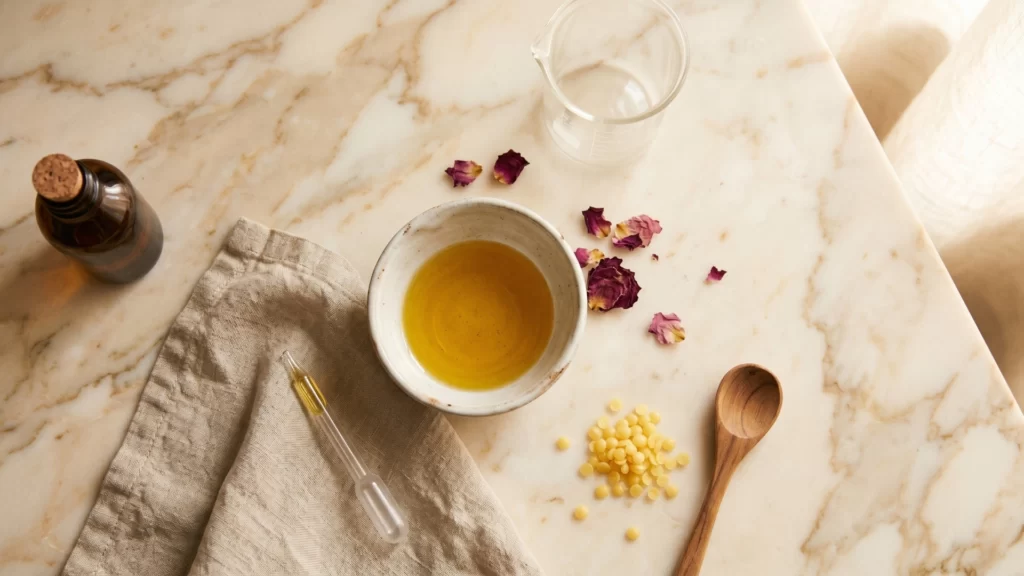
[Image Placeholder: A beautiful flatlay of raw ingredients like jojoba oil in a glass beaker alongside dried rose petals.]
If you’re anything like me, you probably have a giant tub of coconut oil in your pantry that you use for cooking, cleaning, and everything in between.
But using heavy oils on delicate facial skin is a quick way to clog your pores, especially if you aren’t familiar with the scale of comedogenic oils that can trap bacteria and cause breakouts.
Finding the best carrier oils for face serums completely changed the game for me. You want something that mimics your skin’s natural sebum. Jojoba oil, sweet almond oil, and rosehip oil are my absolute holy grails because they absorb beautifully without that greasy feeling.
Mistake 3: Skipping the Patch Test
I get it. You’ve just mixed up a beautiful, fragrant potion, and you want to slather it on immediately. I am so guilty of this.
But botanical allergies are real, even when you’re using the purest, organic ingredients.
Always swipe a tiny bit of your new blend on your inner forearm and wait 24 hours. Your face will thank you for your patience!
My “Beginner’s Glow” Blend
If you’re ready to try a reliable, foolproof homemade face oil recipe, this is the exact one I use when my skin needs calming down.
- 30ml of Jojoba oil (your perfect, lightweight base)
- 3 drops of Lavender essential oil (for soothing)
- 3 drops of Frankincense essential oil (for that healthy glow)
Add the jojoba to your glass dropper bottle, carefully drop in the essential oils, give it a gentle roll between your palms to mix, and you’re done.
Embracing the Process
Making your own skincare is one of the most rewarding, frugal, and sustainable habits you can start, whether it’s a simple face serum or a luxurious whipped body butter recipe.
Once you know how to navigate the common DIY face oil mistakes, you unlock a whole world of pure, customised care that costs a fraction of what you’d pay in a store.
You get to control every single drop that goes onto your skin, and there is so much power in that.
If you’ve tried mixing your own facial serums, I’d love to hear what worked for you. What is your absolute favourite base oil to use?
You May Also Like