
Ingredient sourcing note: Some ingredients mentioned in this article are available from The Skin Science Company (theskinsciencecompany.com.au), an Australian cosmetic raw materials supplier. We recommend them based on the quality and availability of their products. We have no commercial, affiliate, or sponsorship relationship with them and receive no payment or commission for these mentions.
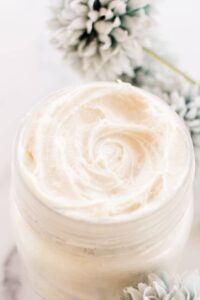
Creating your own DIY calming face cream is a rewarding experience, especially when you can tailor the ingredients to suit the unique needs of sensitive or irritated skin. In the world of botanical skincare, few ingredients are as revered for their soothing properties as lavender and chamomile. This professional-grade formulation combines the anti-inflammatory power of these botanicals with modern humectants and barrier-supporting lipids to create a luxurious, calming moisturiser that reduces redness and restores skin comfort.
The Science of Soothing: Why Lavender and Chamomile?
When formulating for sensitive skin, the goal is to provide immediate relief while strengthening the skin’s natural barrier. Lavender (Lavandula angustifolia) and Chamomile (Matricaria chamomilla or Anthemis nobilis) are not just chosen for their delightful scents; they contain potent bioactive compounds that actively calm the skin. For intermediate and advanced formulators, understanding the synergy between these two botanicals is key. While lavender is widely known for its soothing aroma, its topical benefits are equally impressive, particularly for skin that is prone to redness or mild irritation from environmental stressors. Chamomile, often referred to as ‘the skin’s best friend,’ brings a depth of anti-inflammatory power that is difficult to match with synthetic alternatives. Together, they form a powerhouse duo that addresses the root causes of skin reactivity while providing a sensory experience that promotes overall wellness.
Lavender essential oil is rich in linalool and linalyl acetate, which have been shown in various studies to possess significant anti-inflammatory and analgesic properties. Similarly, chamomile contains bisabolol and chamazulene, compounds known for their ability to penetrate the skin and reduce the production of inflammatory mediators. Chamazulene, in particular, is what gives German Chamomile its deep blue hue and is a byproduct of the distillation process, offering incredible antioxidant and anti-inflammatory support. Bisabolol, on the other hand, is a sesquiterpene alcohol that not only soothes but also acts as a penetration enhancer, helping other beneficial ingredients in your DIY calming face cream reach the deeper layers of the epidermis where they can be most effective. By incorporating these into a DIY calming face cream, you are creating a product that addresses irritation at a cellular level, providing both immediate relief and long-term barrier support.
Understanding the Formulation Strategy
This face cream is an oil-in-water (O/W) emulsion, which allows us to deliver both water-soluble hydrants and oil-soluble emollients. For sensitive skin, we avoid harsh emulsifiers and instead use gentle, skin-mimicking options like Olivem 1000 or Polawax. Olivem 1000 is particularly favoured in professional DIY circles because it is derived from olive oil and creates liquid crystal structures that mimic the skin’s own lipid bilayer, leading to better absorption and a non-greasy finish. We also include “barrier-builders” like Panthenol (Pro-Vitamin B5) and Allantoin, which help to repair the skin’s surface and lock in moisture. Panthenol is a powerful humectant that also promotes wound healing and skin regeneration, making it an essential inclusion for any formula aimed at calming irritated or compromised skin. Allantoin, naturally found in comfrey root, is an anti-irritant that helps to shed dead skin cells while promoting the growth of healthy new tissue, ensuring your face cream is as effective as it is gentle.
| Phase | Ingredient | Percentage (%) | Function |
|---|---|---|---|
| Heated Water | Distilled Water (or Aloe Vera Juice) | 55.5% | Solvent / Hydrator |
| Heated Water | Chamomile Hydrosol | 15.0% | Soothing Water Phase |
| Heated Water | Vegetable Glycerin | 3.0% | Humectant |
| Heated Water | Panthenol (Pro-Vitamin B5) | 2.0% | Healing / Soothing |
| Heated Oil | Jojoba Oil | 8.0% | Biocompatible Emollient |
| Heated Oil | Evening Primrose Oil | 5.0% | Anti-inflammatory Lipid |
| Heated Oil | Olivem 1000 (or Polawax) | 5.0% | Emulsifier |
| Heated Oil | Cetyl Alcohol | 2.0% | Thickener / Stabiliser |
| Cool Down | Lavender Essential Oil | 0.5% | Active / Scent |
| Cool Down | German Chamomile Essential Oil | 0.5% | Active / Scent |
| Cool Down | Vitamin E (Tocopherol) | 0.5% | Antioxidant |
| Cool Down | Broad Spectrum Preservative (e.g., Germall Plus) | 0.5% | Preservation |
| Cool Down | Allantoin | 0.5% | Anti-irritant |
| Total | – | 100% | – |
Step-by-Step Instructions
Formulating a DIY calming face cream requires precision and a focus on hygiene. Ensure all your equipment is sanitised with 70% Isopropyl Alcohol before you begin.
- Prepare the Phases: Weigh your Heated Water Phase ingredients into one heat-resistant glass beaker and your Heated Oil Phase ingredients into another.
- Heating: Place both beakers in a water bath (a wide pan with about 2-3cm of simmering water). Heat until both phases reach approximately 70-75°C. Ensure the emulsifier and thickener are completely melted.
- Emulsification: Remove from heat. Slowly pour the Heated Water Phase into the Heated Oil Phase while stirring constantly. Use an immersion blender (stick blender) for 1-2 minutes to create a stable emulsion. You will see the mixture turn opaque and white as it emulsifies.
- Cooling: Continue to stir by hand as the mixture cools. This helps to create a smooth, stable structure. Once the temperature drops below 40°C, it is time for the Cool Down Phase. This is a critical window where we add our most sensitive ingredients to ensure they remain stable and effective.
- Add Actives: Weigh and add your Cool Down Phase ingredients (Essential oils, Vitamin E, Allantoin, and Preservative). When adding essential oils, it is best to pre-mix them with a small amount of your oil phase if possible, though adding them directly to the cooling emulsion is standard practice. Stir thoroughly for at least 2-3 minutes to ensure even distribution throughout the cream. You may notice the scent of the lavender and chamomile becoming more prominent as they are incorporated.
- pH Testing: Test the pH of your cream. For a face cream, a pH of 5.0 to 5.5 is ideal to maintain the skin’s acid mantle and ensure your preservative system functions correctly. If your pH is too high, you can lower it by adding a few drops of a 10% citric acid solution. If it is too low, a 10% L-arginine or sodium bicarbonate solution can be used to raise it, though this is rarely necessary with this specific formula.
- Packaging: Transfer your finished cream into a clean, airtight jar or pump bottle. Airless pump bottles are particularly recommended for sensitive skin formulations as they minimise exposure to oxygen and contaminants, extending the shelf life and efficacy of your DIY calming face cream. Label it clearly with the date of manufacture and a full list of ingredients for future reference.
Expert Tips for Success
While the basic recipe is straightforward, advanced formulators know that small details make a big difference in the final product’s efficacy and feel.
1. Choosing the Right Chamomile
In this DIY calming face cream, we recommend German Chamomile (Matricaria recutita) essential oil if you are dealing with significant redness. It contains higher levels of chamazulene, which gives the oil its characteristic blue colour and superior anti-inflammatory power. If you prefer a lighter floral scent, Roman Chamomile is an excellent alternative.
2. Temperature Control
Adding essential oils and preservatives to a mixture that is too hot can cause them to degrade or evaporate. Always wait until the cream is below 40°C before adding your heat-sensitive actives. This ensures your lavender and chamomile remain potent and effective.
3. The Importance of Preservatives
Because this formulation contains water (distilled water and hydrosol), it must be preserved. Without a broad-spectrum preservative, your cream will become a breeding ground for bacteria, mould, and yeast within days. For a professional-grade DIY product, Liquid Germall Plus or Geogard ECT are reliable options for home formulators.
Conclusion
This DIY calming face cream is a testament to how botanical wisdom and cosmetic science can work together. By carefully selecting ingredients like lavender, chamomile, and evening primrose oil, you can create a moisturiser that rival high-end commercial products in both feel and performance. Whether you are dealing with seasonal dryness or chronic sensitivity, this cream provides the gentle care your skin deserves.
For those looking to source the highest quality ingredients for their formulations, The Skin Science Company (theskinsciencecompany.com.au) offers an extensive range of cosmetic-grade raw materials, including pure essential oils, hydrosols, and professional emulsifiers perfect for Australian DIY formulators.
You May Also Like