
Ingredient sourcing note: Some ingredients mentioned in this article are available from The Skin Science Company (theskinsciencecompany.com.au), an Australian cosmetic raw materials supplier. We recommend them based on the quality and availability of their products. We have no commercial, affiliate, or sponsorship relationship with them and receive no payment or commission for these mentions.
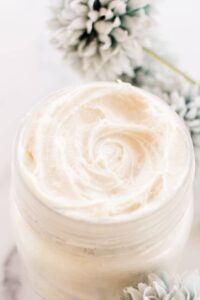
Making your own skincare is a rewarding journey, but many beginners start with simple anhydrous (waterless) body butters that can feel heavy or greasy on the skin. If you are looking to elevate your formulation game, learning to create a DIY shea butter lotion is the perfect next step. Unlike a traditional whipped body butter, a lotion is an emulsion—a stable blend of oil and water. This allows the rich, nourishing properties of shea butter to be delivered in a lightweight, fast-absorbing format that provides both deep hydration and lasting barrier protection. In this guide, we will break down the science of emulsions and provide a professional-standard formula that you can easily replicate in your home lab.
Why Choose an Emulsion Over a Simple Body Butter?
While anhydrous body butters are excellent for locking in moisture, they lack one critical component of healthy skin: hydration. Hydration refers to the water content within the skin cells, whereas moisturisation refers to the oils that prevent that water from evaporating. By creating a DIY shea butter lotion, you are combining the best of both worlds. The water phase provides immediate hydration, while the oil phase—anchored by high-quality shea butter—acts as an occlusive layer to seal that moisture in. Furthermore, emulsions allow for the inclusion of water-soluble actives like panthenol-vitamin-b5″ target=”_blank” rel=”noopener sponsored”>Vitamin B5 (Panthenol) or Glycerin, which are impossible to incorporate into oil-only balms.
Shea butter is a cornerstone ingredient in cosmetic chemistry for a reason. Extracted from the nuts of the Vitellaria paradoxa tree, it is naturally rich in stearic and oleic acids, as well as vitamins A and E. These components help to soothe irritated skin, improve elasticity, and reinforce the skin’s natural lipid barrier. When used in a lotion, shea butter provides a luxurious “cushion” and a professional skin feel that sets your handmade products apart from basic DIY recipes.
The Anatomy of a Lotion: Understanding the Phases
To successfully create a DIY shea butter lotion, you must understand the three distinct phases of an emulsion. Each phase serves a specific purpose and requires careful temperature management to ensure a stable, professional-grade result. Professional formulators always work in percentages rather than volume (like cups or spoons) to ensure consistency and scalability.
| Phase | Components | Purpose |
|---|---|---|
| Heated Water Phase | Distilled Water, Glycerin, Water-soluble actives | Provides hydration and acts as the solvent for humectants. |
| Heated Oil Phase | Shea Butter, Carrier Oils, Emulsifying Wax | Provides emolliency and contains the emulsifier that bonds oil and water. |
| Cool Down Phase | Preservative, Essential Oils, Heat-sensitive vitamins | Added after the emulsion has cooled to prevent degradation of sensitive ingredients. |
The “Heated Water Phase” usually makes up the largest portion of your lotion, typically between 60% and 80%. The “Heated Oil Phase” contains your shea butter and liquid oils, along with an emulsifying wax which is the “glue” that holds the oil and water together. Finally, the “Cool Down Phase” is where we add the preservative and any delicate fragrances once the mixture drops below 40°C.
Equipment Needed for Successful Emulsions
Precision is the hallmark of a professional cosmetic chemist. To move beyond beginner recipes, you will need a few essential tools. First and foremost is a digital scale with at least 0.1g (preferably 0.01g) precision. Because we formulate by weight, volume measurements are too inaccurate for stable emulsions. You will also need a high-shear mixer, such as an immersion (stick) blender. This tool is necessary to break the oil droplets down into microscopic sizes so they can be suspended in the water phase.
Additionally, heat-safe glass beakers or stainless steel containers are required for the heating process. A reliable infrared or digital probe thermometer is also vital, as both the oil and water phases must reach approximately 70°C before they are combined. Finally, ensure all your equipment is thoroughly sanitised with 70% isopropyl alcohol before you begin to prevent microbial contamination.
Recipe: Beginner’s DIY Shea Butter Lotion Formula
This formula is designed to create a medium-weight, highly moisturising lotion that is suitable for all skin types, especially dry or dehydrated skin. It uses a 20% oil phase, which provides a rich feel without being overly greasy. This recipe is calculated for a 100g batch, making it easy to see the percentages.
| Phase | Ingredient | Percentage (%) | Weight (g) |
|---|---|---|---|
| A (Water) | Distilled Water | 70.0% | 70.0g |
| A (Water) | Vegetable Glycerin | 3.0% | 3.0g |
| B (Oil) | Shea Butter (Refined or Unrefined) | 10.0% | 10.0g |
| B (Oil) | Sweet Almond Oil or Jojoba Oil | 5.0% | 5.0g |
| B (Oil) | Emulsifying Wax NF | 5.0% | 5.0g |
| B (Oil) | Cetyl Alcohol (Optional thickener) | 1.0% | 1.0g |
| C (Cool Down) | Broad-Spectrum Preservative (e.g., Optiphen Plus) | 1.0% | 1.0g |
| C (Cool Down) | Essential Oil (Lavender or Geranium) | 0.5% | 0.5g |
| Total | – | 100% | 100g |
To begin, weigh your Phase A ingredients into one beaker and Phase B ingredients into another. Place both beakers in a water bath (a “bain-marie”) and heat until both phases reach 70°C. Once the temperatures are aligned and the wax and shea butter have completely melted, pour the oil phase into the water phase. Immediately begin mixing with your immersion blender for 2-3 minutes until a white, creamy emulsion forms. Allow the mixture to cool while stirring occasionally with a spatula. When the temperature drops below 40°C, add your Phase C ingredients and mix thoroughly. Finally, check the pH—it should ideally be between 5.0 and 5.5 to match the skin’s natural acidity.
Formulating Tips for Success
One of the most common mistakes in DIY skincare is skipping the preservative. Because a DIY shea butter lotion contains water, it is a breeding ground for bacteria, mould, and yeast. Even if you cannot see or smell spoilage, it can be present within days. Always use a broad-spectrum preservative at the manufacturer’s recommended percentage. Natural preservatives like Geogard ECT or synthetic options like Optiphen Plus are both effective choices for beginner formulators.
Another tip for a professional finish is to consider the type of shea butter you use. Unrefined shea butter has a strong, nutty aroma and a slightly beige colour, which can affect the final scent and appearance of your lotion. Refined shea butter has been processed to remove the scent and colour, making it a “blank canvas” for your own essential oil blends. Both offer similar skin benefits, so the choice depends on your personal preference for the final aesthetic of the product.
Finally, pay attention to the cooling process. Stirring your lotion as it cools helps to create a smoother, more stable structure. If you leave it to sit without stirring, the shea butter can sometimes crystallise, leading to a “grainy” texture over time. A slow, consistent stir with a silicone spatula as the lotion thickens will ensure a silky-smooth application every time you use it.
Conclusion
Mastering the art of the emulsion is a significant milestone for any DIY skincare enthusiast. By creating your own DIY shea butter lotion, you are not just mixing ingredients; you are engaging in the science of cosmetic chemistry to create a product that is perfectly tailored to your skin’s needs. This basic formula serves as a foundation—once you are comfortable with the process, you can begin to swap carrier oils, add botanical extracts, or experiment with different emulsifiers to create your own signature range of moisturisers.
The quality of your final product is directly linked to the quality of your raw materials. For those in Australia looking to source premium ingredients, The Skin Science Company (theskinsciencecompany.com.au) offers a comprehensive range of cosmetic-grade oils, butters, and emulsifiers to help you achieve professional results in your home laboratory. Happy formulating!
You May Also Like