Ingredient sourcing note: Some ingredients mentioned in this article are available from The Skin Science Company (theskinsciencecompany.com.au), an Australian cosmetic raw materials supplier. We recommend them based on the quality and availability of their products. We have no commercial, affiliate, or sponsorship relationship with them and receive no payment or commission for these mentions.
I have a confession to make.
When I first started my DIY skincare journey, I wore the “Preservative-Free” badge like a medal of honour. I thought I was being the ultimate purist. I believed that by skipping those unpronounceable ingredients, I was doing the absolute best thing for my skin.
I’d whip up a batch of rosewater toner or a lush DIY night cream recipe, pop it in a cute amber glass jar, and feel incredibly smug.
That was until I looked at one of my creations under a microscope a few weeks later.
Spoiler alert: It was a bacteria party.
“It turns out, there is a massive difference between ‘fresh’ and ‘safe.’ While I’m all about low-tox living, slathering invisible mould on my face causes a damaged skin barrier, which is definitely not self-care.”
If you’ve been relying on the fridge to keep your creations safe, or you think your Vitamin E oil is doing the heavy lifting, pull up a chair. We need to have an honest chat about natural preservatives.
The Golden Rule: Water Equals Life (and Bacteria)
Here is the simplest way to look at it, and it’s the rule I live by now.
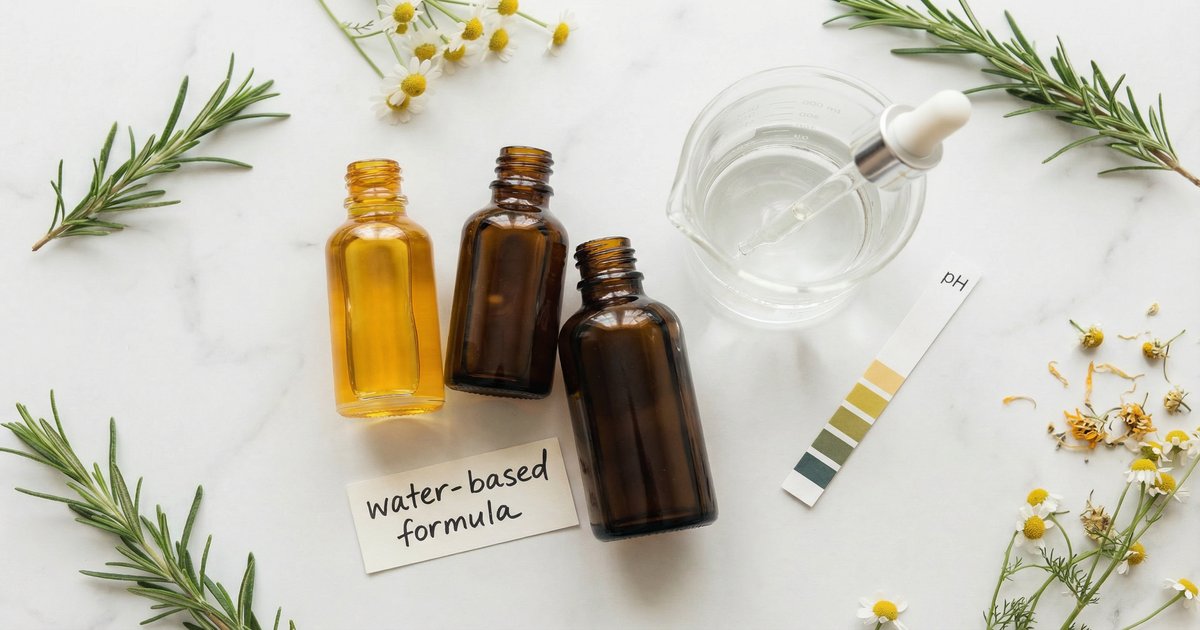
Bacteria, yeast, and mould love water. They thrive in it. When you mix oil and water, you are essentially creating a five-star hotel for microbes.
Without a broad-spectrum preservative, a water-based product has a shelf life of about 3 to 5 days—even in the fridge.
However, there is good news. If you are making products that are 100% oil-based (known as anhydrous products), you are generally in the clear. Things like:
- Whipped body butters (oils only)
- Lip balms
- Face oils and serums
- Salves (like a soothing DIY eczema cream)
These don’t necessarily need a preservative because bacteria can’t grow without water. But the moment you introduce water—or even put wet fingers into a jar of body butter in a humid bathroom—you’re risking contamination.
The Big Myth: “But I Use Vitamin E!”
This is the most dangerous myth in the DIY community, and I fell for it too. I used to drop Vitamin E or Rosemary Leaf Extract (ROE) into everything, thinking I was safe. But here is the critical distinction that changed everything for me:
Vitamin E is an antioxidant, not a preservative.
Think of antioxidants like sunscreen for your oils. They stop your beautiful jojoba or rosehip oil from going rancid (oxidising) and smelling like old crayons. They keep the oils fresh, but they do absolutely nothing to stop bacteria, yeast, or mould from growing.
Using Vitamin E as a preservative is like putting a lock on your front door but leaving the windows wide open. The oils might stay fresh, but the bugs are still getting in.
The “Good Guys”: Safe Natural Preservatives for Aussie DIYers
Once I got over my fear of “adding chemicals,” I realised that using a safe, Eco-certified preservative was actually the most sustainable choice. Throwing away a batch of expensive ingredients because it went off after a week? That’s heartbreaking (and expensive).
Here are the two preservatives I now keep in my stash. They are broad-spectrum (meaning they kill bacteria, yeast, AND mould) and are easy to get hold of here in Australia.
1. Preservative Eco (Plantaserv M)
Best For: Lotions, creams, and serums intended for bottles or pumps.
This was a game-changer for me. It’s a broad-spectrum preservative system that is paraben-free and formaldehyde-free. It meets strict ecological standards, which ticks my sustainability box.
Why I love it: It has a faint scent of almonds or marzipan. While some people find it tricky to mask, I actually love the smell—it makes my plain lotions feel a bit like a treat. It’s oil-soluble, so you add it at the cool-down phase.
2. Geogard 221 (Cosgard)
Best For: Toners, body washes, and shampoos.
If you are making something with a high water content that needs to stay crystal clear (like a micellar water or a gel), this is my go-to. It’s also ECOCERT and COSMOS approved.
Why I love it: It’s water-soluble and incredibly easy to use. I find it’s a bit more forgiving if I’m experimenting with pH levels, and it’s generally very gentle on the skin.
Safety Is the Ultimate Self-Care
I know it feels counter-intuitive. We get into DIY to avoid additives, and here I am telling you to add one in.
But my perspective shifted when I realised that protecting my skin from infection is more important than the “preservative-free” label. You can still be crunchy, eco-conscious, and natural while using safe synthetics or nature-identical preservatives.
I’d love to know—have you ever had a DIY batch go wrong on you? Or have you found a preservative you swear by? Let me know, I’m always keen to swap notes.
You May Also Like