DIY Sunscreen at Home: Is It Safe and How to Do It
When it comes to sun protection, the idea of whipping up your own DIY sunscreen in the comfort of your kitchen sounds appealing. After all, who wouldn’t want a natural, chemical-free formula tailored exactly to their skin’s needs? But before you ditch your store-bought SPF for a homemade lotion, it’s crucial to understand the realities behind DIY sunscreen. Is it truly safe? Can you achieve effective sun protection? This guide will walk you through the essentials of making a simple, mineral-based sunscreen with zinc cream-sensitive-skin/”>oxide, while highlighting important safety considerations every DIY skincare enthusiast should know.
Understanding the Basics of Sunscreen and Sun Protection
Sunscreen works by either absorbing or reflecting ultraviolet (UV) light to prevent skin damage. Commercial sunscreens typically combine chemical UV filters and physical blockers to achieve broad-spectrum protection with an assigned SPF rating. DIY sunscreen recipes often rely on mineral ingredients like zinc oxide, which physically block UVA and UVB rays.
Zinc oxide is a natural mineral commonly used in sunscreens because it offers broad-spectrum protection and is generally safe for sensitive skin. However, the effectiveness of any sunscreen depends on the concentration and particle size of zinc oxide, the formulation’s stability, and how it is applied.
Is DIY Sunscreen Safe?
While making your own DIY sunscreen can be a fun and empowering project, it’s important to be aware of potential risks:
- Unreliable SPF: Homemade sunscreens usually lack laboratory-tested SPF ratings, meaning you can’t be certain how much protection you’re actually getting.
- Inconsistent application: Without proper formulation, the zinc oxide may not disperse evenly, reducing effectiveness.
- Stability concerns: DIY sunscreens might separate or degrade quickly without preservatives and proper emulsification.
For these reasons, DIY sunscreen is best used as a supplementary sun protection measure rather than a sole defence during prolonged sun exposure, especially in intense Australian sunlight.
How to Make a Basic Zinc Oxide DIY Sunscreen
If you’re ready to try making a simple mineral sunscreen at home, here’s a straightforward and safe recipe designed for broad-spectrum protection using non-nano zinc oxide.
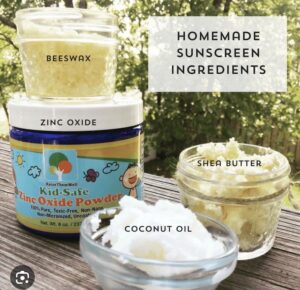
Ingredients List
- Distilled water – 65% (65g)
- Coconut oil (fractionated or pure) – 10% (10g)
- Shea butter – 5% (5g)
- Non-nano zinc oxide (25-30% concentration for SPF ~20) – 20% (20g)
- Emulsifying wax (plant-based) – 8% (8g)
- serum-scars/”>Vitamin E oil (antioxidant) – 1% (1g)
- Optional: Essential oils (lavender or chamomile, max 0.5%) – 0.5% (0.5g)
Equipment Needed
- Double boiler or heat-safe bowls
- Digital scale (accurate to 0.1g)
- Glass mixing bowl
- Hand mixer or whisk
- Glass jar or air-tight container for storage
- Gloves and mask (to avoid inhaling zinc oxide powder)
Step-by-Step Method
- Prepare the oil phase: In a heat-safe container, combine coconut oil, shea butter, and emulsifying wax. Gently heat using a double boiler until fully melted and combined.
- Prepare the water phase: Warm the distilled water to about 70°C (158°F) in a separate container.
- Combine phases: Slowly pour the warm water into the melted oils while whisking continuously. Continue mixing for several minutes until the mixture thickens into a creamy lotion.
- Add zinc oxide: Wearing a mask and gloves, gradually sift or sprinkle the zinc oxide powder into the lotion. Stir thoroughly to ensure even dispersion without clumps. Avoid inhaling the fine powder.
- Add antioxidants and optional oils: Stir in vitamin E oil and any essential oils if desired. These help preserve the formula and add a pleasant scent.
- Cool and store: Allow the sunscreen to cool completely before transferring into a clean, airtight container.
Safety Precautions When Making DIY Sunscreen
- Zinc oxide handling: Non-nano zinc oxide is considered safe, but inhaling the powder can irritate your lungs. Always wear a mask and gloves when handling it.
- Patch test: Before use, perform a patch test on a small skin area to check for sensitivity or allergies.
- Avoid chemical UV filters: DIY recipes often exclude these, so remember your sunscreen may not offer full-spectrum protection comparable to commercial options.
- Sun exposure: Use DIY sunscreen alongside other sun safety methods like shade, hats, and protective clothing.
- Keep it clean: Use sterilised equipment and containers to minimise microbial contamination.
Storage and Shelf Life
Store your DIY sunscreen in a cool, dark place to prevent oil rancidity and ingredient breakdown. Because homemade formulas typically lack strong preservatives, aim to use your batch within 6 weeks. Always check for changes in smell, texture, or colour — discard if any signs of spoilage appear.
FAQ About DIY Sunscreen
1. Can I make my sunscreen without zinc oxide?
Zinc oxide is the most effective physical blocker for DIY sunscreens. Without it, your formula won’t provide reliable UVA/UVB protection. Other minerals like titanium dioxide are options but require careful handling and formulation.
2. How do I know the SPF of my DIY sunscreen?
Without laboratory testing, you cannot accurately measure the SPF of homemade sunscreen. The zinc oxide concentration gives a rough estimate, but factors like evenness of application and particle size also affect protection.
3. Is DIY sunscreen better than commercial products?
DIY sunscreen can be gentler and free from synthetic chemicals, but commercial sunscreens have undergone rigorous testing for safety, stability, and efficacy. Use DIY sunscreen as a supplementary layer rather than your sole protection.
4. Can I add fragrance or essential oils to my sunscreen?
Essential oils can enhance scent but may increase photosensitivity or irritation risk. Use sparingly and choose skin-safe oils like lavender, avoiding citrus oils that increase sun sensitivity.
5. How often should I reapply DIY sunscreen?
Like all sunscreens, reapply every two hours or after swimming, sweating, or towel drying for effective protection.
Conclusion: Embrace DIY Sunscreen as Part of Your Skincare Journey
Making your own DIY sunscreen at home can be a rewarding way to connect with natural ingredients and customise your sun care routine. While homemade formulas won’t entirely replace commercial sunscreens’ proven protection, they offer an empowering, educational experience perfect for DIY skincare enthusiasts and small-batch formulators. Just remember to prioritise safety, understand limitations, and always complement your sunscreen with good sun habits. By taking charge of your skincare, you’re not just protecting your skin—you’re embracing a mindful, creative approach to wellbeing under the Aussie sun.
You May Also Like